
The military escalation in Gaza is not just an increase in the number of strikes; it is a qualitative shift in the way of fighting and its objectives, with serious humanitarian, legal and political consequences. For civilians, this means greater danger to daily life and a rapid drain on human resources.
Military Escalation in Gaza
Military escalation is meant to increase the level of violence and the scope of combat operations across multiple dimensions; it includes the expansion of the geographical area targeted, the intensification of air, land and sea strikes, the increase and acceleration of attacks, in addition to the transfer of targeting from purely military sites to civilian infrastructure. The escalation is also reflected in the tightening of security and logistical restrictions on civilians and the movement of humanitarian aid. This shift in size and intensity of operations is usually associated with a change in the strategic objectives and operational considerations of the parties involved in the conflict.
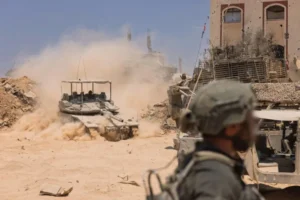
Manifestations of military escalation
- Intensification of air and ground attacks: A marked increase in the frequency of raids, with the call-up of reserve ground forces and attempts at incursions into large civilian areas.
- Large-scale ground incursions: Residential neighborhoods are being entered to "take control or cleanse," leading to direct clashes within neighborhoods and buildings.
- Double attacks: Initial strikes followed by a second strike targeting paramedics or civilians rushing to rescue and evacuate the wounded, compounding the risks to medical staff, journalists, and residents.
- Narrowing humanitarian corridors and tightening blockade: By limiting access to food, fuel, and medicine, it makes conflict areas almost humanitarianly isolated and deepens the population’s living crisis.
Impact of military escalation
- Increase in civilian deaths and injuries: The high civilian death toll is not just a figure in war reports, but a direct reflection of the breakdown of humanitarian protection in conflict zones. The rising number of civilian deaths and injuries is not just a symptomatic result of military escalation.
- Internal Displacement: Internal displacement in Gaza is one of the most important humanitarian consequences of the military escalation, as thousands of families are forced to leave their homes and take refuge in overcrowded schools or shelters that lack basic necessities of life. This displacement is not only a loss of shelter, but is followed by a loss of privacy, deteriorating health conditions, and the spread of diseases as a result of overcrowding and poor sanitation, exacerbating the suffering of the population.
- Interruption of Aid: The disruption of humanitarian aid in Gaza is exacerbating the hunger crisis and leaving civilians without basic survival support.
- Targeting Vital Facilities: Targeting vital installations in Gaza, such as hospitals, water and electricity stations, and furnaces, leads to the collapse of basic services and compounds the suffering of civilians. Stopping these facilities deprives people of health care, clean water, and food, makes daily life more difficult, and increases the risk of disease and malnutrition, especially among the most vulnerable.
Read more about Forced displacement in Gaza
Recent military events in Gaza
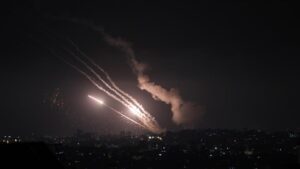
Gaza has been witnessing a continuous military escalation for more than two years, including large-scale operations carried out by Israel, most notably Operation Force and Sword in March 2025, which targeted the infrastructure of Hamas. According to the Gaza Health Ministry, more than 850 Palestinians were killed, including many women and children.
In August 2025, Israel launched a large ground operation in Gaza City, declaring control over about 40% of the city, with operations concentrated in the Zeitoun and Sheikh Radwan neighborhoods. The campaign has killed dozens of civilians and destroyed many residential towers, displacing thousands of Palestinians from their homes. Israeli military statements indicate the intention to expand the scope of operations in the coming days, amid mounting fears of a worsening humanitarian situation in the Strip.
On the humanitarian front, the Gaza Strip is facing a severe food crisis that has worsened as the UN reports that more than 370 people have died from famine and malnutrition, including 131 children. This disaster is attributed to the ongoing blockade, the collapse of supply chains, and the lack of humanitarian assistance, which led to widespread hunger among the population, especially among the most vulnerable groups such as children and the elderly. The situation is getting worse by the day, amid warnings from international organizations that urgent intervention is needed to avert a wider humanitarian catastrophe.
Read more about Crimes against Gaza Journalists

