
The water and electricity crisis is one of the most serious humanitarian challenges facing the population in many years and has been exacerbated by repeated rounds of military escalation and destruction of infrastructure. The limited natural resources in the Strip, together with the blockade and restrictions on the introduction of fuel and maintenance materials, have made access to electricity and potable water a matter of daily survival.
Causes of the Water and Electricity Crisis in Gaza
The seriousness of the crisis is that it is not limited to the frequent interruption of basic services, but extends to groundwater pollution, the disruption of desalination and sewage plants, and the collapse of distribution networks, which threatens public health and exacerbates humanitarian conditions.
Causes of Electricity Crisis in Gaza:
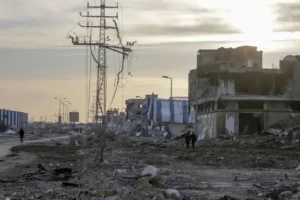
1. Destruction of electricity infrastructure
The power plant was repeatedly targeted in strikes, destroying fuel tanks, turbines, and control centers. Even when partially restored, its capacity remains far below that of the population. Shelling and military operations have also destroyed or disrupted high-pressure lines carrying electricity from Israel and Egypt, sometimes difficult to repair due to restrictions on the entry of maintenance teams or equipment. In addition, power poles, ground cables, and substations were destroyed or cut. This means that even the available electricity does not reach homes and hospitals stably.
As a result, the actual generation capacity has fallen to less than half of the basic needs of the population, daily outages amounting to more than 16 ساعة20 hours per day in some periods, and the power outages are immediately reflected in the operation of hospitals, water pumping stations, and sewage plants.
2. Lack of fuel
The entry of fuel into Gaza is strictly controlled, and any closures or restrictions on quantities cause immediate shortages. Gaza also does not produce fuel domestically, so any disruption to external supply leads to a direct crisis. During bombing or power outages, reliance on private generators increases, raising consumption significantly.
As a result, the power plant shuts down or operates only partially, and health services collapse, hospitals rely on generators; when they run out of fuel, intensive care devices and dialysis machines stop pumping water and desalination, without fuel the pumps do not work, and clean water reaches homes. Pollution is exacerbated by the fact that when sewage plants are shut down due to the lack of fuel, wastewater is released to the sea or the streets.
Read more about Fuel Crisis in Gaza
3. Maintenance deficit
The lack of maintenance in the Gaza Strip is due to several interlocking factors, most notably restrictions on the entry of equipment and spare parts for the repair of electricity and water networks, where many of these items are classified as dual-use items, which hinders their regular arrival. Unstable security conditions also prevent maintenance teams from gaining quick access to crash sites, as well as poor funding and an economic crisis that limits organizations’ ability to pay technicians and buy equipment. This is compounded by repeated damage from military targets, making any repair vulnerable to destruction again.
This lack of maintenance results in long-term power and water outages, as the breakdowns remain untreated. It also contributes to the loss of network efficiency and its ability to transfer and distribute basic services in a stable manner.
Causes of crisis Water In Gaza:
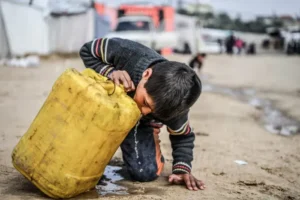
1. Destruction of water network and treatment plants
The Gaza Strip is repeatedly damaged in water networks and treatment plants as a result of direct or indirect military operations, as pipelines and pumping and desalination plants are damaged, causing them to fail. Sanitation plants are also targeted or disrupted, losing wastewater treatment capacity. In addition, the infrastructure is already weak due to old age and lack of maintenance, as well as the lack of electricity and fuel to operate pumping and treatment plants even if they are not completely destroyed.
This destruction has led to frequent interruptions of drinking water, forcing thousands of families to rely on mobile tanks or unsafe sources. It has also caused the discharge of large quantities of untreated wastewater into the sea or soil, polluting groundwater and increasing its salinity. These conditions negatively affect public health by increasing the risk of the spread of intestinal diseases and epidemics associated with water pollution.
2. Groundwater contamination
The Gaza Strip suffers from severe groundwater pollution as a result of excessive depletion of water layers and the gradual leakage of salt sea water to underground reservoirs, in addition to the discharge of large quantities of untreated wastewater due to the suspension of sewage and desalination plants.
Groundwater pollution has made it harder for residents to access safe drinking water, leading many to rely on expensive or unsafe alternative sources. It also increased the risk of outbreaks of waterborne diseases such as diarrhea and gastrointestinal infections, and negatively impacted agriculture and the local environment due to high salinity and soil pollution, making groundwater quality more difficult to restore in the long run.
3. Disruption of sewage plants
Sanitation plants in the Gaza Strip have been disrupted as a result of direct destruction during military operations and poor old infrastructure, in addition to the lack of electricity and fuel needed to operate pumps and stations, causing them to stop working. Restrictions on the entry of maintenance materials and spare parts also hampered the rapid repair of faults, leaving the plants unable to treat wastewater properly.
The disruption of sewage plants has led to the discharge of large quantities of contaminated water directly into the sea or adjacent land, further polluting the environment and groundwater and threatening public health with the spread of intestinal and skin diseases. This pollution has also affected agriculture and natural resources, making any attempt to restart the water system more difficult due to the accumulation of contaminated waste and waste in pipes and sewers. IM
The impact of the water and electricity crisis on the lives of the population in Gaza
This crisis in the Gaza Strip is one of the most complex and affecting the details of daily life, as it is no longer just a service problem, but has turned into an existential threat to public health, food security, the economy and the social life of the population. For many hours – up to 20 hours a day – electricity cuts have forced families to live a forced, wait-and-see lifestyle, where basic household appliances are disrupted, children are deprived of a proper school environment, and the sick and elderly live in dangerous conditions due to lack of refrigeration, heating, or even lighting for home medical care.
On the water front, a severe shortage of available quantities and contamination of most underground sources have pushed people to rely on tank water or purchase desalinated water at higher costs than most families can afford, deepening the gap between basic needs and limited income. This reality has led to a deterioration in public hygiene and an increase in the spread of waterborne diseases such as diarrhea and typhoid, in addition to the high incidence of malnutrition and weak immunity in children due to the consumption of unsafe water. The lack of electricity has also been reflected in the operation of desalination and sewage plants, which has led to the pumping of large quantities of wastewater into the sea and polluting the marine and coastal environment on which fishermen depend for their livelihoods, thus reducing food sources and increasing the suffering of the economic sector linked to the sea.
In economic terms, small-scale production and industrial activities have been hampered by the constant interruptions, as workshops and factories are difficult to operate without a stable electric current, contributing to increased unemployment and poverty. Education, on the other hand, has been clearly affected, as it is difficult for students to study at night or use electronic means, at a time when electricity has become a prerequisite for distance education and communication with the world. Along with all this, the crisis has created enormous psychological and social pressures; living continuously in conditions of lack of services generates feelings of helplessness, frustration and fear of the future, which increases rates of depression and anxiety within society, and affects family and social cohesion.

