
Weather conditions in the Gaza Strip, especially during cold and rainy seasons, are becoming a source of real suffering for the population, given the harsh humanitarian conditions they are living under. Climate variability is not just a transient natural phenomenon, but an additional burden on the lives of Gazans, who face it with limited resources and dilapidated housing. Heavy rains, high winds and low temperatures exacerbate living and health crises, especially among displaced people and affected families, making the weather a compounding factor for daily pain and suffering in the Gaza Strip.
Weather conditions and their impact in the Gaza Strip
Impact of heavy rains on housing and infrastructure
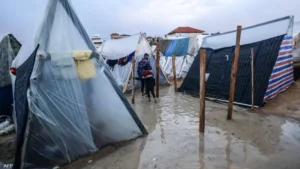
Heavy rains are one of the most serious natural factors that exacerbate the suffering of the population in the Gaza Strip, especially in light of the widespread destruction of housing and infrastructure as a result of the war. Repeated raids have destroyed most homes, leaving them unable to provide adequate protection from rain water, as water leaks into homes and tents, damaging furniture and essentials, especially children and the elderly. In terms of infrastructure, rainwater drainage systems suffer from severe wear and tear and are clearly unable to absorb large quantities of water, as a result of the destruction of large parts of it and lack of necessary maintenance. This weakness leads to the collection of water in the streets and residential neighborhoods for long periods, causing the roads and temporary tents resorted to by the displaced, making them uninhabitable.
Read More Winter Impacts on Living Conditions in Gaza
Winds and storms and their impact on temporary housing and damaged homes
The high winds and storms are contributing significantly to the suffering of Gaza residents, as they live in makeshift shelters such as tents or in homes partially damaged by shelling. They lack the durability needed to withstand extreme weather, making them vulnerable to collapse or rupture as winds intensify. Strong storms uproot tents or tear off their covers, leaving families without shelter and protection, and forcing them to face the cold and rain in extremely harsh humanitarian conditions. Damaged homes with unstable cracks or roofs are also more likely to collapse partially or completely due to wind pressure, posing a direct risk to residents’ lives. In addition, the wind causes debris and debris from the destruction, increasing the likelihood of injuries and increasing fear and insecurity among parents, especially children and the elderly.
The suffering of the displaced in cold weather and water leakage
The places of displacement lack minimal protection from cold and rain. Most tents and temporary shelters are made of light materials that do not provide adequate insulation, leaving them unable to cope with severe weather conditions. The infiltration of water into tents and temporary shelters exacerbates the psychological and physical suffering of the displaced, as blankets and clothing become wet and residents are forced to spend long nights in inhumane conditions that lack warmth and safety. This is also directly reflected in the stability of living, as the displaced feel a constant state of anxiety and fear of deterioration of their situation at any moment.
Read More Shelter crisis in post-war Gaza
Lack of heating and its impact on daily life
The lack of heating is one of the most important challenges facing the population of the Gaza Strip during the winter, in light of the limited availability of fuel and its high cost, in addition to the continuous power outages. This reality forces many families to resort to alternative and unsafe means of heating, such as burning wood or plastic or using primitive means, which pose an immediate risk to their lives and increase the likelihood of choking or fires.
Worsening health conditions due to weather conditions
Severe weather conditions are contributing to the worsening health conditions in the Gaza Strip, where heavy rains and severe cold are increasing the spread of many diseases, especially respiratory infections and skin diseases, as a result of constant humidity and water leakage to housing and stagnant water collection in the streets and residential areas. The health situation is worsened by inadequate living conditions, especially in tents and temporary shelters that lack proper ventilation and hygiene, creating a suitable environment for the spread of infection among the population, especially children and the elderly. Poor heating and malnutrition also contribute to weakened immunity, which increases morbidity and prolongs recovery.
This health crisis is exacerbated by limited medical resources, lack of medicines and medical supplies, and the great pressure on health centers and hospitals, which are already suffering from a shortage of staff and equipment. As a result, patients find it difficult to get the right treatment at the right time, placing an additional burden on the health sector and threatening the lives of many patients.

