
In light of the continuous escalation and the near collapse of the health sector in Gaza, there is an urgent need to strengthen the capacity of emergency and ambulance services, especially the provision of an equipped ambulance. The presence of ambulances is an essential element of the healthcare system, for its great role in transporting patients and saving lives, and ensuring rapid response to injuries and critical cases, especially in light of repeated aggression and constant bombing, and the difficulty of safe access to medical facilities.
Why is an ambulance so urgent in Gaza?
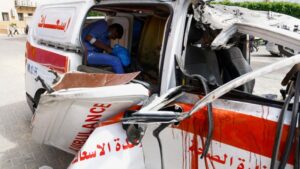
Since the beginning of the escalation of the aggression in October 2023, the Gaza Strip has witnessed a catastrophic situation in the health sector, according to the Ministry of Health, the Israeli occupation army destroyed more than 60 ambulances, targeted 160 health institutions, and 28 hospitals were out of service, causing an inability to deal with the growing numbers of wounded and sick daily, in light of the acute shortage of medicines and medical supplies, and the lack of access to affected areas and the transfer of emergency cases, which exacerbated the humanitarian disaster in an unprecedented way.
1. Increase in the number of injured and injured daily
The number of wounded and wounded since the beginning of the aggression is more than 131,559 people, 70% of the victims are children and women, and this continuous increase exceeds the capacity of hospitals and medical teams to absorb, especially in light of the lack of medical staff and the departure of a large number of health facilities from service. It also puts constant pressure on the ambulance and makes it even more important to have a sufficient number of ambulances equipped and trained to ensure an emergency response in Gaza.
2. Destruction of a large number of hospitals and health centers
Since the beginning of the aggression, the occupation forces have directly targeted many hospitals and health centers in Gaza, causing dozens of medical facilities to go out of service, either due to total destruction, severe damage or power, water and fuel cuts. This led to the destruction of health infrastructure which significantly reduced the number of places that could receive the sick and injured.
Despite this, a few hospitals are still trying to operate despite poor capacity and overcrowding, but cannot accommodate all the cases coming from different areas of the Strip. New ambulances are urgently needed in Gaza to transport the wounded and sick from areas where health facilities have been damaged to the remaining centres capable of providing treatment.
3.Difficulty using normal vehicles to transport the injured
In light of the ongoing aggression on the Gaza Strip, large numbers of private vehicles have been destroyed or damaged by direct shelling or shrapnel, and roads are no longer safe or usable due to rubble and collapses. This has led to almost total paralysis in transportation, especially in emergencies. In addition, even if operational, standard vehicles do not contain any medical equipment or ambulances. Thus, attempting to transport the injured using unequipped transport may expose them to serious complications or even death on the way.
What is the role of the ambulance during humanitarian crises in Gaza?
1. Provide first aid inside the ambulance in the field of the event before reaching the hospital
Medical teams within the ambulance provide critical medical ambulance services that require immediate therapeutic intervention before being transported to hospitals, with the aim of stabilizing the injured person and reducing the risk of death or serious complications. These include:
-
Stop the bleeding.
-
Cardiopulmonary resuscitation.
-
Install fractures and wounds.
-
Give oxygen, monitor vital signs.
2. Rapid response to emergencies
Rapid response is one of the most important functions of the ambulance, especially in light of the circumstances in the Gaza Strip, which is witnessing repeated aggression and continuous shelling, which led to successive crises and complex health conditions. This response includes:
-
Access to casualties within minutes of the accident despite field hazards or infrastructure damage.
-
Provide first aid on site to ensure the stability of the health of the injured before being transported.
-
Rapidly transfer critical cases to health facilities capable of providing care.
3. Access to destroyed areas
The Israeli occupation has destroyed areas in Gaza, where many residential areas and infrastructure are completely or partially destroyed, isolating entire neighborhoods from their surroundings and making access extremely difficult. As a result, ambulances enter the affected areas despite the risks, evacuating those who cannot go out on their own as a result of injuries, destruction or road disruption. It is also working to provide emergency primary medical intervention in areas where no form of health care is available. In addition, critical cases are transferred from remote or besieged areas to hospitals, which are still barely functioning, for appropriate treatment.
Read more about Gaza under the rubble:
The Importance of Ambulances in Gaza
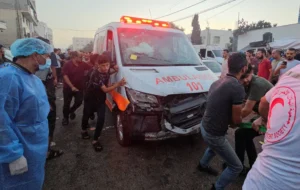
Many ambulances in Gaza have been rendered out of service as a result of repeated targeting by the Israeli military. A large number of ambulances were destroyed in the line of duty, significantly reducing the emergency system’s ability to respond quickly and transport casualties. This tragic reality has led to a severe shortage of medical transport, and has made it more difficult to reach the wounded and injured in time, threatening their lives and compounding the scale of the health and humanitarian disaster in the Strip.
Therefore, supporting the provision of an ambulance is an urgent humanitarian necessity, which contributes directly to saving lives and alleviating the suffering of civilians trapped in the collapse of the health system and the continuation of the aggression. The presence of a equipped ambulance allows immediate medical care to be provided at the event site, through first aid that may make a difference between life and death, especially in critical cases resulting from shelling or explosions.
Ambulances also have access to severely affected areas, where safe transport is not available, and are the only means of transporting the wounded to hospitals that are still functioning. In addition, it contributes to reducing the burden on overcrowded hospitals by moving patients between health facilities and organizing the movement of emergency cases according to the degree of risk.
With acute shortages of medical personnel and equipment, the mobile ambulance is an essential support tool for medical staff, providing a field medical environment that helps them take life-saving actions during transport. Providing additional ambulances enhances the continuity of medical work and increases the efficiency of humanitarian response in one of the most affected areas in the world.

