
Today, the Gaza Strip is experiencing a catastrophic shelter crisis, affecting some 1.9 million displaced people who were forced to leave their homes after the devastating war. These displaced people live in temporary tents that do not provide them with adequate warmth or protection, amid harsh conditions exacerbated by heavy rains and wind and rain in winter. Rainwater floods the worn-out tents, and their remnants are blown away by the wind, leaving families facing freezing cold and constant deprivation of the most basic necessities of life. Many families resort to any available space to hide, even if it is narrow or uninhabitable, to avoid staying in the open.
The magnitude of the post-war shelter crisis
The tents are constantly being torn apart and collapsed, threatening the lives of hundreds of thousands of people who have lost their shelter and are living in a constant state of anxiety and fear for their children’s future. Children, women and the elderly are the hardest hit, finding themselves truly homeless and at risk of death.
This major humanitarian crisis requires an urgent response, to provide safe shelter and basic relief items, to give families a sense of peace and security, and to alleviate their endless daily suffering. In these difficult moments, providing support and assistance to every displaced person becomes a matter of life and death.
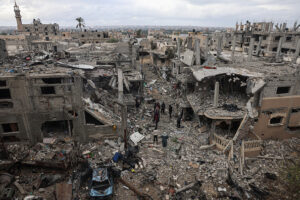
Finding adequate shelter is one of the main challenges facing Palestinian families in the Gaza Strip after the war, especially after large areas of buildings and infrastructure were damaged during the war. Hundreds of families have found themselves in dilapidated homes and uninhabitable neighbourhoods, facing a difficult reality that lacks the basic necessities of life. The suffering of the population does not stop at the loss of shelter, as it extends to great difficulties in access to water and food due to damaged infrastructure, disrupted water lines and blocked roads. All this indicates that the recovery journey will be long.
Tens of thousands of Gaza residents are still without real shelter, living in harsh conditions in makeshift tents or homes threatened with collapse, while the risks increase with successive lows, extreme cold and heavy rains, making daily life more difficult and nearly impossible. The remnants of shelling in the streets and under the rubble pose a constant danger to civilians, especially children and the elderly, in light of the failure to completely remove the rubble, adding new crises to the lives of the people of Gaza and making them overburdened.
What can we do for Gaza in 2026?
How has the war affected the shelter crisis faced by Gazans?
Thousands of Palestinians in the Gaza Strip are seeking shelter after war destroyed large areas of homes and infrastructure, leaving many families homeless. Some live in makeshift tents or uninhabitable places, while rubble and dust are scattered in the streets and affected neighborhoods, and residents are stuck waiting for the necessary humanitarian aid to arrive. Children in Gaza face daily crises that affect their lives after two years of war and siege. Many live in tents that lack security, food and water, and schools have stopped in many areas. In addition, some children lost family and friends during the war, leaving significant psychological effects on them. Older persons are in difficult circumstances, with many having lost their homes and sources of income. They face increasing difficulties in securing basic needs such as food, water and health services, as public services decline.
Read more about Humanitarian relief in Gaza in the current crisis
Women in Gaza bear additional burdens after the war, as their responsibilities to provide for families, provide food, shelter and care for children and the elderly have become greater, at a time when employment opportunities are scarce and access to basic services is weakened, adding to the daily pressures on their lives. Many climatic conditions are exacerbating the post-war shelter crisis in the Gaza Strip, where tents and damaged homes are exposed to extreme cold and heavy rain, making daily life even more difficult. The remnants of shelling and rubble remain on the streets, posing a constant threat to civilians, especially children and the elderly.
- Lives of displaced people in tents
Amid the shelter crisis, many Palestinians in the Gaza Strip are looking for a safe place to shelter from winter and autumn rains, with collapsing tents and dilapidated structures, lack of alternatives, and lack of adequate shelters. Displaced people suffer from a lack of shelter from rain and wind, as many tents have collapsed or been torn apart by rain, leaving thousands of families homeless even if it is simple. In the winter, the camps become pools of mud, so their lives are at risk and many families live in conditions that lack the most basic necessities such as safe shelter, warmth, food and clean water. This requires rapid action to meet their basic needs.
- Collapse of camps and lack of basic necessities
Tents scattered in the displacement areas of the Gaza Strip are temporary sanctuaries that are not permanently habitable, as they are often made of worn-out fabric that does not provide adequate protection from the vagaries of the weather, whether it is cold in winter or heavy rains and dust storms. Gazans also live in confined spaces, often far below the needs of family members. Over time, the problems of the shelter crisis are exacerbated by sanitation and hygiene in the camps, leading to the spread of infectious diseases among the residents of the Strip and worsening the shelter crisis, and increasing the burden on families struggling to provide minimum hygiene for children and the elderly. Tent congestion and poor ventilation directly affect the health of children, especially those with chronic diseases or weakened immunity.
- Lack of basic needs in camps
Daily life in the displacement camps in the Gaza Strip is becoming increasingly difficult, with thousands of families struggling to survive without access to food, water and medicine, and with services declining due to access restrictions. As winter approaches, this suffering deepens further, especially as new tents and winter shelter supplies are blocked, leaving families exposed to a harsh and merciless cold.
- Deterioration of camp structure
Nearly two million displaced people live in old tents that lack the slightest protection from cold, wind and rain. These tents do not provide thermal insulation and do not prevent water leakage, which led to the sinking of hundreds of tents during the first winter waves, and the loss of many families of what was left of the simple belongings they had pulled from the rubble of their homes. The population also suffers from a severe lack of water and sanitation services, increasing the risk of contamination and disease, especially among children who have difficulty coping with this harsh reality.
- Lack of services and medicines
Health conditions are becoming more complex by the day, as the large shortage of medicines and medical supplies puts chronic and elderly patients in constant danger. As temperatures drop, respiratory and pulmonary disease rates rise, at a time when families are unable to provide adequate heating or health care in camps.
This is due to the unprecedented health collapse, due to the acute lack of medicines and medical supplies and the denial of entry of the necessary supplies needed by the injured to save lives. Even hospitals have disrupted most vital services within them, most notably open-heart operations and cardiac catheterization, which led to the death of many patients in the north of the sector, in addition to cancer patients who are left to their fate because of the interruption of the basic treatments they relied on to live.
With the destruction of a large number of hospitals and health facilities, the lack of tools in the camps to treat the injured, and the restriction of the work of medical teams, the entire health system is on the verge of total collapse. The Israeli measures included not only the blockade, but also systematic steps to dismantle the health infrastructure and target its ability to work, through bombing hospitals and clinics, and obstructing the entry of fuel and medical equipment, including targeting medical staff who were killed, arrested and displaced. With a large number of doctors and nurses losing their ability to carry out their tasks, the health collapse inside camps and even hospitals has increased, making emergency surgeries, and even basic treatments for chronic patients, almost impossible under this suffocating siege.
- Lack of adequate humanitarian assistance
Humanitarian assistance reaching the Strip is far below what the population needs and remains insufficient to meet their minimum daily needs. Local estimates indicate that a large proportion of the tents have become uninhabitable, either due to rupture or complete collapse as a result of rain and storms, leaving thousands of families without stable shelter to rely on.
Hundreds of thousands of families have lost their homes, while restrictions on the entry of relief items, tents and blankets continue, explaining the acute lack of basic shelter. With increasing numbers of displaced people, some camps are unable to accommodate more, increasing the pressure and narrowing the space for everyone.
How the post-war shelter crisis is affecting the mental health of Gazans
Not only have the occupying forces destroyed Gaza’s infrastructure, they have destroyed homes, camps and everything that can provide a minimum level of safety, leaving residents homeless, without food or care, and without psychological support to alleviate the horror of what they have experienced. Thousands of Palestinians have lost their loved ones and been displaced for months in harsh conditions, deepening their psychological wounds in an unprecedented way. But children are particularly traumatized by the killing and destruction they have witnessed, and their everyday memories have turned into scenes that do not leave their imaginations, such as explosions, building collapses and the loss of family members. These experiences are far greater than any child's ability to absorb.
1. It has a profound psychological impact on everyone in Gaza.
The two-year war has created a general psychological crisis affecting the entire population of the Strip. The horrific scenes they lived through, corpses, body parts, blood, destroyed homes that caused deep psychological distress, and left internal wounds that could last for years, especially for those who had recently lost their lives or experienced dangerous moments of fear and flight. The need for mental health services in Gaza has more than doubled in the past two years, but the tragic irony is that the mental health sector itself has collapsed: the only psychiatric hospital in Gaza has been destroyed, and the clinics and centers that provided support and treatment have been damaged, leaving the population without any psychological or medical cover.
Today, many people live in a constant state of anxiety and insecurity. Fear of the unknown, loss of stability, and difficulties in trying to survive. All of this is combined to put the mental health of Gazans on the brink of total collapse. Difficulties in accessing psychological care services are an additional and particularly severe tragedy due to the blockade and ongoing restrictions. How can a people, deprived of food, water and medicine, find something to ease their mental pain or support them in the worst conditions a human being can imagine?
2. Loss of sense of security and stability
The loss of shelter is one of the most psychologically unstable factors, as residents face permanent insecurity as a result of living in tents or destroyed buildings that do not provide a minimum level of protection. This situation promotes a sense of constant danger and leads to high rates of anxiety and fear, which puts the individual in a state of constant psychological readiness and limits his ability to return to a normal life.

