
The continued shelling, despite the ceasefire, reflects the contradiction between the political discourse and the reality on the ground in the Gaza Strip, where the truce has gone from a promise to protect and stop the bloodshed to a fragile situation that does not prevent casualties or stop the destruction of homes and infrastructure. While the ceasefire is supposed to provide breathing space and humanitarian access, raids and targeting continue, keeping civilians under constant threat.
Bombing continues despite ceasefire
Despite the entry into force of the ceasefire agreement in the Gaza Strip on 10 December 2025, the Israeli occupation continues to commit daily violations, including air strikes and heavy artillery shelling, raising fears of escalating tensions and disrupting humanitarian efforts. According to recent reports today, December 26, 2025, the occupation carried out violent raids at dawn on the city of Khan Yunis in the south of the Strip, in conjunction with intensive artillery shelling targeting the eastern areas, resulting in injuries and the collapse of buildings. Other violations have also been recorded in northern and eastern areas, including bombings and missile launches, with some 393 documented since the agreement began, with 10 new violations today alone.
- Targeting the eastern areas of Khan Younis and Gaza City
Areas east of Khan Younis city in the south of the Strip, as well as areas east of Gaza City, are among the areas most exposed to continuous artillery shelling. These attacks result in injuries and collapse of buildings, and raise serious concerns about the fate of the civilian population in these areas.
- Escalation in North and Central
Northern and central areas of the Gaza Strip also witnessed other violations, including bombings and rocket fire. These operations increase tension and hinder any efforts to restore stability and provide humanitarian assistance.
Increasing suffering and population displacement as a result of continued shelling
These continued violations exacerbate the humanitarian situation in the Strip, where the number of martyrs and wounded increases daily. The population is also facing significant challenges due to the displacement of families and destruction of infrastructure. Reports indicate that sustained shelling leads to the collapse of previously bombed buildings and the drowning of displaced people’s tents in areas prone to shelling, increasing their suffering.
The continued escalation raises fears of forced displacement of residents, especially east of the "yellow line" expanded by the Israeli army. This military expansion means that Israel controls about 60 percent of Gaza, putting residents in a precarious position and increasing pressure on them.
Read More The Yellow Line in Gaza
Violations Highlights and Implications
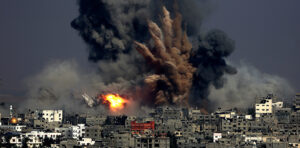
Various areas of the Gaza Strip are witnessing a dangerous escalation in the field, consisting of artillery shelling and air strikes targeting east of Khan Younis, east of Gaza City, Jabalia, Zaytoun, Sajiya, Beit Lahia, Rafah and Nuseirat, which resulted in the death of martyrs and wounded and the collapse of a number of buildings, and forced entire families to flee amid a severe worsening of the humanitarian situation and great difficulty in reaching aid. In parallel, smoke and gas bombs were fired at the tents of returning families, causing widespread civilian casualties and intimidation, increasing feelings of fear and panic, and putting the lives of displaced people at immediate risk. Areas east of the so-called "yellow line" have also seen the expansion of military control over additional areas of the Strip, raising serious concerns of forced displacement and restricted population movement. In addition, a number of buildings in different areas have been demolished, resulting in extensive destruction of infrastructure and homes, the displacement of more people, and a high number of displaced people in the absence of any guarantees of protection or stability.
Read More Truce: Are the guns really silent in Gaza?
Bombing Continues in the Absence of Media Truth
What is happening in Gaza today can be understood in a broader context of manipulation of the concept of the truce itself, where a political and media ceasefire was declared, but this declaration did not actually translate into a real commitment on the ground. From the very first moments of the so-called truce, artillery shelling and airstrikes continued, and martyrs and wounded fell, confirming that the truce was only a formal pledge that was deliberately revoked, in clear violation of any humanitarian or legal obligations.
What is more, the targeting and killing of journalists has been a focal point of this scene; journalists are the face of the truth, and their targeting cannot be separated from the attempt to silence the Palestinian narrative and reduce media coverage. With no or no direct coverage from the field, the pace of news has declined compared to before the truce was announced, though the reality on the ground has not improved. This shows how this so-called truce has been used as a tool to ease media and international pressure, not as a step to protect civilians.
The announcement of the truce also gave a false impression to world public opinion that the escalation had stopped, allowing the passage of continuous violations away from the spotlight, such as the demolition of houses, the expansion of military control, and the targeting of populated areas and tents for displaced people. In this context, the truce is only a political cover used to justify international silence, while the covenant is effectively broken on the ground, and the policy of killing and destruction continues systematically.
In doing so, the truce has gone from an opportunity to stop the humanitarian bloodshed to a media deception that devoids the concept of its real content and contributes to the absence of ongoing crimes, at a time when civilians are paying the highest price for their lives, security and right to life.

