
The "yellow line" in the Gaza Strip is a focal point in the ongoing discussions about the future of the region, as it is not just a geographical line on the map, but an expression of a complex military and political reality that is beginning to take hold on the ground. This line, which emerged in the context of a proposed peace plan for a ceasefire, represents a de facto partition of the Gaza Strip and has profound implications for Palestinian lives and the reality of the region.
What is the Yellow Line in Gaza?
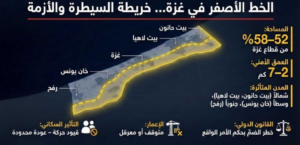
A de facto border line inside Gaza, behind which the IDF stands as a military control zone with strict security applications. He has been publicly described as representing "new frontiers" in statements by Israeli leaders, including Chief of Staff Eyal Zamir. Some reports state that it is described as both a front line of settlements and a line of attack. It is marked on the ground with yellow-painted concrete blocks and yellow tiles and signs to effectively demarcate the border, and runs about 2 to 7 kilometers deep inside the Strip, taking about half or more of Gaza.
Read More Truce: Are the guns really silent in Gaza?
Geographical details and field control of the yellow line
The Yellow Line runs from Beit Hanoun and Beit Lahia northwards, through Khan Younis, to parts of Rafah southwards. This geographical extension means that the line cuts off much of the Gaza Strip. Israel controls between 52% and 58% of the Gaza Strip, with a depth of between 2 and 7 kilometers.
Division of Gaza East and West
According to this demarcation, Gaza is effectively divided into two parts:
- Eastern Region: It is under direct Israeli military control, or classified as a dangerous area that Palestinians are prohibited from entering. For many, the area is a "death ribbon," isolating residents from large parts of their land and homes.
- Western Region: It is known as the "Red Zone" and is intended for the Palestinian population, and has witnessed a large displacement of citizens.
Political and security implications of the Yellow Line
The yellow line goes beyond a temporary military measure to become a political, legal and humanitarian point of contention. It is seen as an advanced line of defense that bolsters Israeli security and serves as a formal new border, according to Israeli military commanders. It is also a high point of warning before decisive military or political action is taken, and an implicit standard of protection for civilians.
-
Line of defense and attack.
The yellow line is described as a front line of defense for nearby Israeli settlements, and an attack line at the same time, reflecting the strategic dimensions of this demarcation. It aims to identify areas where overshooting is a direct threat to Israel’s national security and represents a point of no return or maximum warning.
-
Fears of demographic and political change
The yellow line raises widespread concerns that it could be a prelude to stronger and more permanent Israeli demographic and control changes in Gaza. The debate is whether this line will shift from a temporary measure to a permanent border separating Gaza and dividing it into east and west, which could hinder population movement and further strengthen Israeli control over large parts of the Strip.
The impact of the yellow line on life in Gaza
The yellow line has a direct and profound impact on the lives of Palestinians in the Gaza Strip. The areas behind this line are of limited access, affecting freedom of movement and access to land and property. These changes have led to conflicts and partial displacement in some areas, as a result of Israeli security expansion and military presence.
Some reports described the yellow line as a "death strip" due to the isolation it imposes on residents and preventing them from reaching their homes and land in the eastern regions. This humanitarian aspect further complicates the situation in the Gaza Strip, which is already suffering from difficult conditions.

