
The importance of supporting the winter campaigns for the Gaza Strip stands out at this critical stage, in light of the decline in the volume of humanitarian aid after the truce and the continued suffering of the population as winter sets in. Thousands of displaced people and affected families face harsh living conditions due to cold and rain, while resources to meet their basic needs are shrinking.
The impact of winters and lows on the humanitarian crisis in Gaza
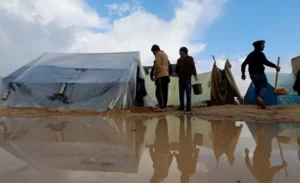
Although the winter season is still in its infancy, the air depressions that hit the Gaza Strip have created a real humanitarian crisis, revealing the fragility of living conditions and infrastructure in the Strip. These declines have been accompanied by heavy rains, strong winds and a marked drop in temperatures, exacerbating the suffering of the population, especially displaced people living in tents and temporary housing that lack basic protection.
The rains have caused streets to sink and water to collect within residential neighbourhoods and areas of displacement, as a result of poor drainage systems and war-damaged areas. Leaks to tents and damaged homes have damaged luggage and increased feelings of insecurity, while residents have no alternatives or treatment possibilities. As the winds intensified, many tents were torn or uprooted, compounding the shelter crisis and forcing some families to face the cold in the open.
Although these conditions occur at the beginning of winter, they pose greater risks in the event of continued low temperatures, with a lack of heating and a decline in humanitarian aid after the truce. This reality increases the pressure on the health sector, with high incidences of cold- and humidity-related diseases, especially among children and the elderly.
Thus, it is clear that winter is no longer just a seasonal change in the weather, but has become a key factor in deepening the humanitarian crisis in the Gaza Strip, where the first air depressions are enough to cause widespread suffering, reflecting the extent of destruction and deprivation experienced by the population, and the urgent need for urgent humanitarian intervention before the winter fully intensified.
Read More Weather conditions and their impact in the Gaza Strip
Focus of Gaza Winter Relief Campaigns
Charity campaigns focus on providing a range of vital assistance aimed at protecting families from cold, hunger and disease. This assistance is designed to meet the immediate and long-term needs of those affected in Gaza.
Read More The most urgent humanitarian needs of the population of the Gaza Strip
1. Winter clothing and blankets campaigns
Warm clothes and blankets are the most important requirements to cope with low temperatures. The campaigns aim to distribute winter cladding, especially for children and the elderly, as well as provide blankets, blankets and mattresses to ensure warmth inside temporary shelters and tents.
2. Tents & Heating Campaigns
With the destruction of homes, the provision of safe shelter has become an absolute necessity. Assistance includes the distribution of tents suitable for weather resistance, as well as the provision of necessary heating materials, which are often scarce and expensive.
3. Food parcels and cash assistance
Many people are facing severe food shortages. The campaigns focus on distributing food parcels containing essential items, as well as providing emergency cash assistance to enable families to purchase their most urgent needs according to their priorities.
4. Sanitation and clean water campaigns
As the situation worsens, the risk of disease spreading increases. Some campaigns include the provision of essential medical supplies and medicines. Providing safe drinking water is also a major challenge, and some organizations are working to ensure that clean water reaches those in need.
The Importance of Supporting Winter Relief Campaigns in Gaza
Humanitarian support for the population of the Gaza Strip is critical at the moment, given the deteriorating humanitarian situation after the truce and the continuing impact of the war on housing and infrastructure. The coming winter poses additional challenges, as displaced people and affected families face the dangers of extreme cold, heavy rains, water leaks, and lack of heating, making their daily lives very difficult even at the beginning of the winter.
Support is now an urgent way to save lives and reduce health risks, especially for children, the elderly and pregnant women, who are the most vulnerable to the weather. It also contributes to protecting temporary housing and tents from collapse and damage, and ensuring that education and basic services continue as much as possible despite harsh conditions.
In addition, it eases the psychological and moral support of the population, by informing them that they are not alone in the face of adversity, and enhances the spirit of solidarity and social solidarity, which helps the community to withstand the challenges coming during the winter. Any support provided at this stage is therefore not limited to meeting immediate needs, but is a vital response to prevent the humanitarian crisis from worsening.

