
Despite the announcement of the ceasefire, the reality on the ground paints a very different picture, as the Gaza Strip continues to witness violence that undermines any chance of stability or reconstruction.
Continued Israeli violations of the truce
The ongoing ceasefire violations are the most prominent feature of the current scene in Gaza. Since the agreement came into force, large numbers of violations have been documented, including artillery and aerial bombardments, direct fire at civilians, and home demolitions. These violations are not limited to a specific area, but spread throughout the Gaza Strip, where more than 194 Israeli violations of the ceasefire agreement were recorded.
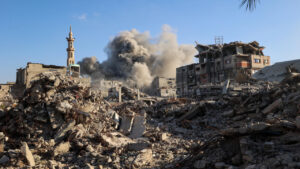
These violations take many forms, from heavy artillery shelling targeting residential neighborhoods to airstrikes causing widespread destruction and casualties. Reports indicate that the targeting of civilians, including children and women, continues, and the demolition of homes, even after displacement, adds to a series of violations that deepen the suffering of the population.
The Israeli army also launched air strikes in conjunction with artillery shelling east of Khan Younis in the southern Gaza Strip, which led to the death toll of 68,875, mostly children and women, since October 2023.
Impact of violations on the worsening humanitarian crisis in Gaza
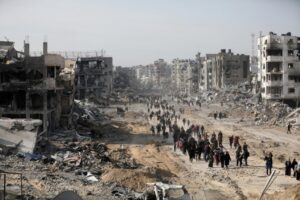
The humanitarian catastrophe in Gaza is a direct result of the continued aggression and blockade. With the destruction of infrastructure, hospitals, and the difficulty of humanitarian access, the population faces harsh and life-threatening living conditions, as the occupation continues its policy of "stifling" the Gaza Strip by rationing the entry of trucks and humanitarian aid, exacerbating the crisis. This lack of food, medicine and fuel directly affects the ability of hospitals to function and provide for the basic needs of citizens, increasing the risk of disease spread and deteriorating health conditions.
In addition to direct damage, the presence of mines and unexploded ordnance poses a serious risk to the lives of civilians, especially children. The massive destruction of infrastructure, including water and sanitation systems, threatens long-term environmental and health disaster.
1. Disruption of aid access and blockade
Aid access continues to be disrupted and the blockade continues, as the Israeli occupation continues to close and restrict land, sea and air entry points, and frequent or prolonged breaks in the passage of medical, food, fuel, water, and emergency supplies, disrupting supply lines and leaving besieged populations without regular access to basic needs. This immediately leads to severe shortages of food, medicine and fuel and puts basic services under the strain of collapse.
- Effects on medical services and hospitals
Hospitals are running out of medical supplies, medicines and surgical supplies, and generator fuel is running short, hampering critical care capabilities. Disruption of supplies increases the rate of direct and indirect deaths and forces hospitals to delay or stop safe deliveries.
- Effects on food security and nutrition
Cutbacks in aid and access restrictions are causing a rapid decline in food availability, high prices and a scarcity of basic foodstuffs. The result has been an increase in malnutrition, especially among children, pregnant women and the elderly, and the emergence of local famines in areas heavily dependent on international aid.
- Impacts on water, sanitation and disease prevalence
Fuel shortages and supply cuts hamper the operation of water plants and sewage treatment, resulting in reduced provision of safe drinking water and increased environmental pollution. This raises the risk of the spread of diseases such as diarrhoea, contaminated wounds and waterborne epidemics, and increases the burden on an exhausted health system.
2. Internal displacement and insecurity
Internal displacement means that people are forcibly displaced within their national borders as a result of continued shelling, loss of housing and constant threats, while insecurity includes continued fear of attacks, incursions, or denial of movement and access to services. This phenomenon in the Gaza Strip has been characterized by repeated mass exoduses and the partial and unsafe return of many residents due to ceasefire violations.
The immediate reasons for displacement are intensified military operations and clashes, as well as aerial and ground bombardment that prompt civilians to leave their homes immediately in search of safe haven. The destruction of homes and infrastructure, as well as the difficulty of accessing residential areas, make it economically and practically impossible to survive in those areas. In addition, the lack of basic services such as water, electricity, health care and food, the lack of legal protection, and the persistence of security risks force families to move within the Strip in search of places where some basic services are available or humanitarian organizations exist.
In addition, there is heavy overcrowding in shelters and public institutions such as schools, mosques and community centres, where thousands of displaced people are sheltered in overcrowded conditions that lack privacy and expose women, children and the elderly to health risks. Lack of adequate shelter also forces many families to live in unsuitable environments, leaving them vulnerable to cold or extreme heat, and leading to high rates of respiratory and skin diseases and infection due to overcrowding and poor health services.
Read more about the crisis of internal displacement and overcrowded shelters in Gaza
What are the reasons for the violations despite the agreements signed?
As the Israeli war on the Gaza Strip enters its bloodiest phase from October 2023 to 2025, efforts have intensified to reach binding agreements for a ceasefire and the release of prisoners. However, the observer for the field and humanitarian situation notes that these conventions are often breached. The latest agreement, which came into force in January 2025, is based on three phases:
- Phase I: A six-week interim comprehensive ceasefire, prisoner swaps, a gradual Israeli withdrawal from densely populated areas, the massive introduction of aid, the start of a return of displaced people, and a pledge to pursue permanent de-escalation negotiations.
- Stage two: Permanent cessation of hostilities, release of remaining Israeli hostages, completion of Israeli withdrawal, negotiation of security and administrative arrangements for the Strip.
- Stage three: Start a major reconstruction of the sector.
Read more about Gaza after the war
The facts on the ground since the outbreak of the last rounds of the war show that the Palestinian resistance factions, led by the Qassam Brigades, have managed, despite the severe siege and the magnitude of the human and material losses, to maintain an organized and effective military structure. It continued to manage its operations in the conflict zones and kept Israeli prisoners, giving it real leverage in any possible negotiations.
On the other hand, Israel adheres to the policy of deterrence through continuous military decisiveness and intermittent bombardments aimed at weakening the military strength of the resistance and imposing a pressing reality on the Palestinian people and their official institutions. Repeated ceasefire violations are often justified on security grounds, such as limited incursions, the arrest of field commanders, the targeting of residential sites or the displacement of civilians.
The social infrastructure in Gaza is suffering unprecedented destruction, with more than a quarter of a million martyrs and wounded, a high proportion of whom are children and women, as well as a total collapse in basic services and public facilities. Mass displacement, family disintegration and chronic fear of renewed war have eroded the social fabric and diminished resilience.
Repeated interruptions of agreements and the difficulty of implementing reconstruction projects have exacerbated the housing crisis and the lack of safe shelter, deepening the social gap and increasing the population’s dependence on foreign aid, restricting their will to need and fear new clashes.
The Israeli blockade, which has been ongoing since 2007, along with repeated wars, has caused the near-total collapse of infrastructure and the local economy. The sector’s GDP losses were estimated at 35% in 2024 alone, with nearly 400,000 jobs lost and unemployment rising to 79% in the fourth quarter of 2023.
Multidimensional poverty reached 96% by the third week of the war, while human development indicators fell to the same level as 16 years ago. The continuation of the war and the blockade prevents the restoration of normal economic activity even during periods of relative calm, as the opening of crossings and the entry of building materials and commercial traffic remains subject to the so-called "security stability" and is used as a tool of political and economic pressure.
Ongoing Israeli violations are also hampering reconstruction efforts, causing a severe housing crisis and worsening water and electricity crises. It also weighs heavily on local communities and humanitarian organizations, which face significant difficulties in providing the necessary funding and liquidity, with a direct impact on the Palestinian banking system as a result of financial constraints and political divisions.

