
Since October 7, 2023, the Gaza Strip has been under one of the deadliest attacks in its history. The ongoing Israeli attacks have claimed the lives of more than 69,000 martyrs, most of them children and women, injured more than 170,000 people in varying numbers, and many victims remain under the rubble, with rescue teams unable to reach them due to the destruction and continued shelling. Air strikes and ground operations continue at an unprecedented pace, resulting in widespread destruction of residential neighbourhoods, hospitals and infrastructure networks. Gaza has become a city besieged by war and isolation, with daily life turning into a battle of survival for civilians in the Gaza Strip.
Gaza is now in a dire crisis, with infrastructure collapsing and basic services almost shut down. More than two million people, half of them children and women, face severe shortages of water, food and medicine, and hospitals are barely functioning at their remaining limited capacity. As the blockade continued, access to the most basic necessities of life became impossible.
Humanitarian situation in the Gaza Strip under siege
The humanitarian situation in the Gaza Strip is experiencing a catastrophic crisis, due to the long years of continuous Israeli blockade. It has had tragic effects on all aspects of daily life in Gaza. This blockade has not only restricted movement and resources, but has become a political pressure tool that increases civilian suffering. Many international bodies have condemned the continuation of this blockade, pointing out that what the people of Gaza are living today is no longer just a political crisis, but has become a serious threat to humanity and the right to life of the people of Gaza. The pain is not limited to the blockade alone; with the ongoing military attacks, life in Gaza has become a perpetual nightmare. Homes have been destroyed, hospitals are severely under-resourced, and water, food and medicine have become scarce and difficult to obtain. Every day, Gazans worry about their lives and the lives of their children, living in fear and loss.
Since the beginning of the war, the Israeli occupation has tried to implement large-scale displacement policies, but has not succeeded in forcing the population to leave. As the shelling continued and any ceasefire was rejected, the policies of destruction and terrorization of civilians escalated. Despite all the pressures that people in Gaza face every day, they are still trying to move forward. While many of them wake up each morning thinking only about how to secure their basic needs, access treatment or hospitals amid the difficult conditions and destruction surrounding them and despite what they are facing, they try to preserve what is left of a normal life, and continue to support and protect their families.
Read More Environmental and health conditions as a result of destruction
How has the blockade affected life in the Gaza Strip?
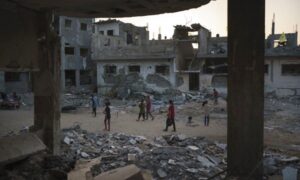
In Gaza, life is not what it used to be. The ongoing siege and destruction caused by the bombing has caused extensive destruction of infrastructure, transforming the lives of thousands of families from settling in their homes to daily displacement and suffering in the open. The homes that gave them safety and familiarity have become uninhabitable, and residential neighborhoods are under constant threat. The damage was not limited to buildings only, but covered all aspects of life.
- Economic aspect
The repeated wars in the Gaza Strip have caused near-total destruction to the most basic elements of life, while the occupation continues to forcibly displace civilians, leaving thousands of families homeless and forcing them to move between temporary places in search of safety. Restrictions on the movement of goods, construction materials and raw materials have prevented factories and businesses from functioning, and many small and medium-sized businesses have closed, resulting in thousands of job losses and high unemployment.
Agriculture and fishing, two of the most important livelihoods of the population, were also affected by the difficulty of introducing agricultural equipment, fertilizers and fuel for fishing, which reduced local production and increased families' dependence on imported food, which often arrived in a limited and irregular manner due to restrictions on crossings.
According to local economic estimates carried by Euronews, Gaza has lost about 93% of its purchasing power since the start of the war. As commodity prices rose, families were forced to cut back on meals or buy less quality food, affecting the health of children, women and the elderly and increasing malnutrition and famine rates. Many families have been forced to flee several times in search of safety, and residents find themselves living daily between ruin and poverty.
The impact of the war is not limited to the economy, but extends to infrastructure, which will have long-lasting effects on the lives of individuals, families and communities. Most of the essential infrastructure necessary for survival has been damaged, including:
Water, sanitation and hygiene: impact on population health and increased risk of disease spread.
Housing and shelter: Many homes have become uninhabitable and people have been forcibly displaced.
- Energy from electricity, fuel and gas: which has become unstable, affecting daily services.
- Transportation: what made movement within the sector difficult and dangerous.
Telecommunications networks: what has affected the ability to communicate and obtain information and assistance.
- Health
The health aspect in Gaza is one of the areas most affected by the ongoing blockade, as restrictions on the entry of basic medical equipment and fuel directly affected the ability of hospitals and health centers to provide their services normally, making the health situation catastrophic and threatened with total collapse. Many hospitals have been forced to reduce services or close some vital departments, including operating rooms and intensive care, due to the lack of medicines and necessary supplies, as well as the bleeding and destruction of hospitals, making the provision of health care almost impossible in many areas, leaving the population in constant fear for their lives and the lives of their children.
Malnutrition exacerbates the health crisis and puts people at high risk of disease and death, especially children, who live between hunger and fear at the same time. There is also a rise in cases of infectious diseases, such as hundreds of suspected cases of meningitis, and with the lack of medical supplies these cases become difficult to treat, increasing the suffering of people.
In addition, a large number of hospitals have been directly affected, with only about 14 still functioning, most providing only emergency services, while patients are unable to access full treatment. The crisis was not limited to the lack of medicines and services, but also included the lack of medical staff due to the injury or loss of some of them during the aggression, where the number of martyrs of medical staff reached 1411 martyrs. Or even the displacement of others, which has weakened the ability of hospitals to deal with emergencies and increased the pressure on the remaining medical teams, which are overstretched daily, trying to save lives despite limited possibilities.
The blockade has also contributed to the spread of chronic and infectious diseases, and because of this, the interruption of the operation of pumping stations and the breakdown of sewage systems due to lack of fuel and equipment led to water pollution, causing the spread of intestinal diseases, while the lack of health care has exacerbated the cases of chronic diseases such as diabetes and high blood pressure, leaving many silently suffering and struggling to survive, and living every day holding on to any glimmer of hope no matter how weak.
- Educational aspect
The war in Gaza has profoundly changed the lives of Gaza’s residents and educational infrastructure, affecting schools, students and teachers alike. The sector suffered significant losses, including the loss of 30 complete schools, including students, teachers and staff, which dealt a severe blow to the educational system. More than 95% of Gaza’s schools were completely out of service as a result of the destruction or severe damage caused by Israeli targeting, while the remaining 5% turned into a place to shelter the displaced, adding to the pressure on already limited infrastructure.
160 schools have been completely destroyed, leaving some 650,000 students out of school for two full years, leaving thousands of families facing significant challenges in providing alternative education opportunities for their children. The educational process in Gaza has become one of the most affected sectors, in light of the continuing difficult humanitarian conditions.
- Food, water and medicine crisis
Today, the Gaza Strip is experiencing one of the harshest humanitarian tragedies. Severe shortages of food, medicine and shelter have made daily life a real battle for survival at a time when the health system is failing to meet the needs of a growing population.
Thousands of families are homeless, displaced people are waiting for a tent to protect them from the cold or the sun, while the inability to provide their most basic needs turns into a daily wound. With food scarce, hunger is no longer a near-endanger, but a reality, with three-quarters of Gaza’s population reaching the most severe stage of food insecurity, which means almost complete deprivation of adequate food.
The effects of the crisis do not stop at the limits of immediate fatigue, but extend to threaten the future of an entire generation. Damage from malnutrition can last a lifetime, manifesting in multiple forms such as stunting, impaired cognitive development, and ill health. Without adequate food, clean water and basic health care, thousands of children are at constant risk, which may be difficult to replace in the future.
Patients with chronic diseases such as diabetes, high blood pressure and cancer are among the most affected in Gaza, facing severe shortages of essential medicines they rely on to survive. Every day they are bombarded, destroyed, infrastructure collapsing, chronic and infectious diseases worsening, and shortages of essential medicines and medical supplies make their lives even more at risk.
Read More Israeli Restrictions on Food Security
On the other hand, the closure of commercial crossings and strict restrictions on the entry of goods have led to severe shortages of basic foodstuffs, and prices have risen dramatically, making access to daily food a daily challenge for tens of thousands of families. With scarce resources, families are forced to reduce their meals or resort to less quality food, increasing the risk of malnutrition among children, women and the elderly, and directly affecting their physical and mental health.
Some 96% of families in Gaza face food insecurity under difficult living conditions, where access to a sufficient meal is not guaranteed. Many live in a state of constant anxiety and fear. This crisis not only threatens their daily lives, but also has long-term repercussions, which may affect the development and health of children for life, and make it more difficult to face the future in a besieged and wounded environment.

